KOROLEKO

KOROLEKO MOUSSA


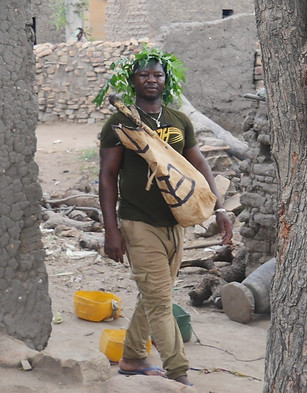

Moussa was born in the small village of Ouarkuye, near Dédougou, Burkina Faso. His father was from the Dembele family of Burkina Faso, and his mother from the Keita family of Mali — two proud lineages bound by artistry and tradition.
But his birth came under difficult circumstances. His mother, only fourteen years old, had been promised in marriage to another man in Benena, Mali, since she was twelve. When she became pregnant, her family faced an unbearable choice — to honour the old promise or accept the new life growing inside her. Bound by ancestral vows, they chose tradition over love.
The child was hidden away, and his mother was sent to fulfil the marriage she had been pledged to. Forbidden to speak of her son, she carried her sorrow in silence. Three months later, the baby — little Moussa — was given to her relatives, the Keita family. A couple unable to have children took him in. In their home in Djibasso, near the Mali border, Life in Djibasso was not easy. His adoptive father was harsh, often punishing him severely. But hardship forged in Moussa an early strength — a quiet fire that would guide him all his life.
When he was around eleven, a woman he believed to be his “sister” often visited him from her husband’s village. She brought him gifts — small tokens of affection that made him feel seen and loved.
One day, when she asked about a shirt she had given him, he broke down and cried, telling her that his adoptive father had burned it and bitten him during a punishment. Overwhelmed with emotion, she could no longer hold back the truth.
With tears in her eyes, she looked at him and said softly,
“The man you call your father is not your father. The woman here is not your mother. I am your mother.”
At first, Moussa refused to believe her. How could someone he called “sister” be his mother? But as she spoke — telling the painful story of his birth, her forced separation, and the father he had never met — something inside him began to stir. He learned that his real father was alive, living in Bobo-Dioulasso, Burkina Faso.
That day changed everything. The truth became both his burden and his light. At the age of twelve, driven by an unshakable longing, Moussa made a brave decision. With no map, no money, and no one to guide him, he hid inside a bus and travelled from Djibasso to Bobo-Dioulasso — searching for the man whose name he barely knew.
The city was vast and bewildering. People spoke Dyula, a language foreign to his ears. The streets were loud and unfamiliar, and Moussa was just a boy — hungry, alone, and invisible. Today, Dembele Moussa’s life is more than a story — it is a song of survival, love, and forgiveness. From the silence of abandonment to the rhythm of drums, from the streets of Ouagadougou to the heart of West African music, Moussa transformed his suffering into strength.
Through his craftsmanship, he gives voice to tradition. Through his music, he offers hope. Through his compassion, he gives life.
His journey reminds us that even the deepest wounds can become the source of our greatest beauty — and that no distance, no loss, and no silence can stop the rhythm of a heart that was born to sing. Moussa never forgot the children who slept on the streets as he once had. He continued to share food with them and with schoolchildren, using his music and work to uplift others.
Now based in London, and has become a professional musician, teacher, and master craftsman of West African instruments—a path he has followed for over 25 years. Now leading his band Koroleko, Moussa has performed as a soloist at Greenbelt Festival (2017), Lion’s Den Opening Show – Boomtown (2018), and for the Shropshire Music Trust. He has also performed with bands such as Native Sun and Minyanta. Between 2019 and 2020, Moussa recorded with Afriquoi and contributed to the soundtrack for Black Is King by Beyoncé, in collaboration with James William Blades.
Alongside performing, Moussa continues to build exquisite, handcrafted kora (African harp), balafon (African xylophone), ngoni (African lute), djembe, and doum doum (bass drum). He also offers professional repair services for all of these instruments.
If you have an upcoming project, performance, or event and are looking to collaborate with a musician specialising in West African music, or if you are seeking a high-quality handmade instrument or repairs, please do not hesitate to get in touch.
Koroleko.com